Role
Senior Product Designer, Growth
Scope
Design, Hypothesis Development, Ai-Prototyping
Impact
+3.2K approvals annualised
Date
Fy26
Problem
Approach
I started with a heuristic review of the RA email and found weak visual hierarchy, dense copy, and lack of affordance for quick approvals. From there, I framed two core design goals: (1) increase discoverability and urgency so requests aren’t missed in the inbox, and (2) give admins enough context and control to approve quickly and safely. I then ideated a set of complementary solutions that we could test as a learning program rather than a single “big bet.” I broke these up into discreet experiments which could be validated independently to measure which changes moved key metrics.
list of experiments
First,working with Data Scientists – I used contextual bandits machine learning to optimise subject lines (Experiment 1), dynamically ranking variants to maximise opens. In parallel, I redesigned the body of the email (Experiment 2) to improve scanability, clearly surface who is requesting what, and make the call‑to‑action more prominent. To address the underlying confidence gap for admins, I worked with Engineering to introduce new contextual notes into the email: one set focused on project/team/priority signals (Experiment 3), and another highlighting collaborators and relevant people signals (Experiment 4). Finally, we tested adding a direct Approve CTA in the email itself (Experiment 5), to reduce friction for high‑confidence approvals while keeping the full review flow available when needed.
Value delivered
The team ran five experiments in Statsig to understand how each layer of the experience contributes to business and customer outcomes. At the email level, we tracked open rate and clicks on Review/Approve CTAs as primary proxies for discoverability and intent. At the org and user level, we measured downstream impact through several secondary and guardrail metrics.
Together, these experiments provided a validated “stack” of RA levers that moved Approvals incrementally and can now be composed into one cohesive experience designed to meaningfully reduce ignored requests, improve approval rates and time‑to‑access.
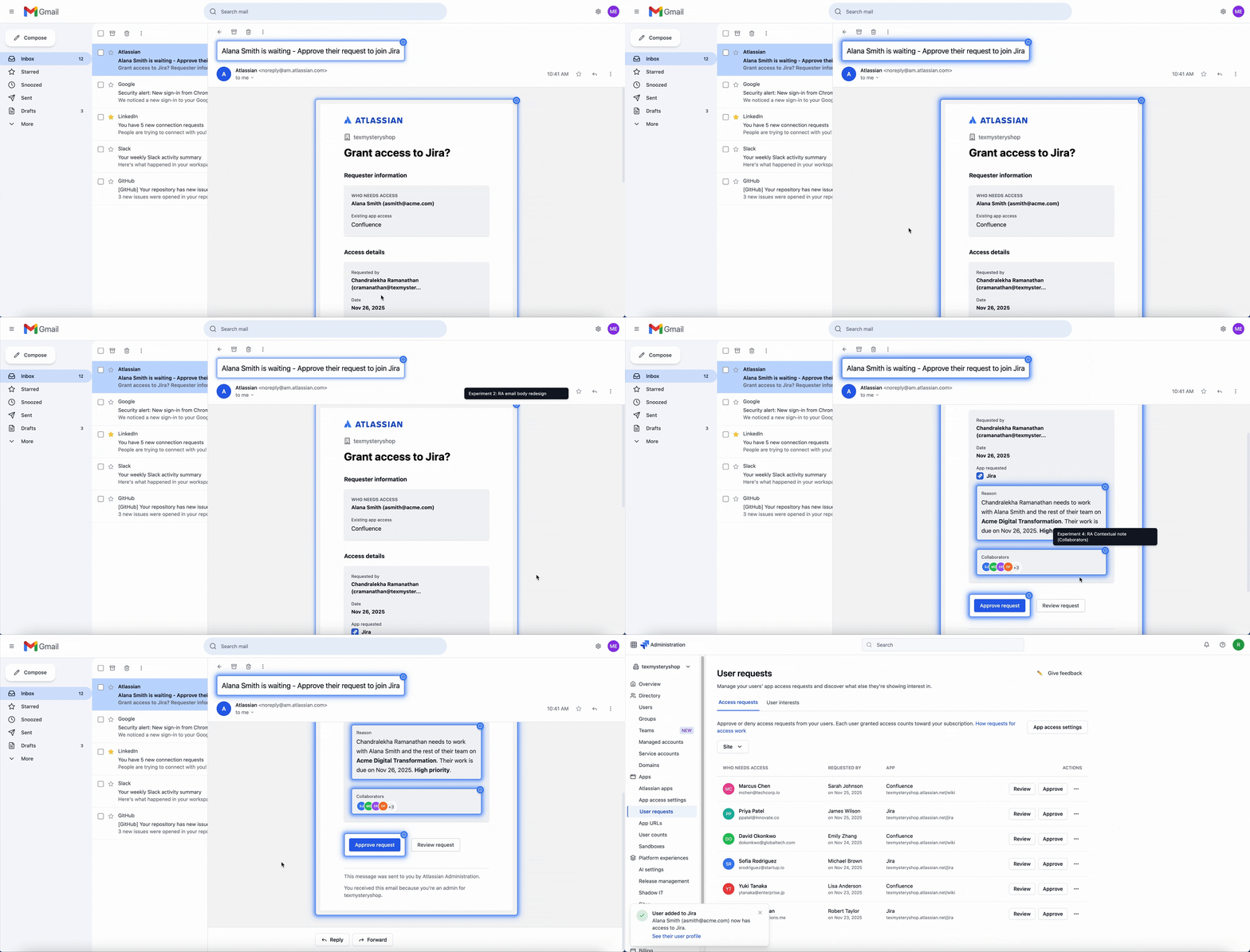
Video walkthrough of control and variant
Experiment 1 snapshots
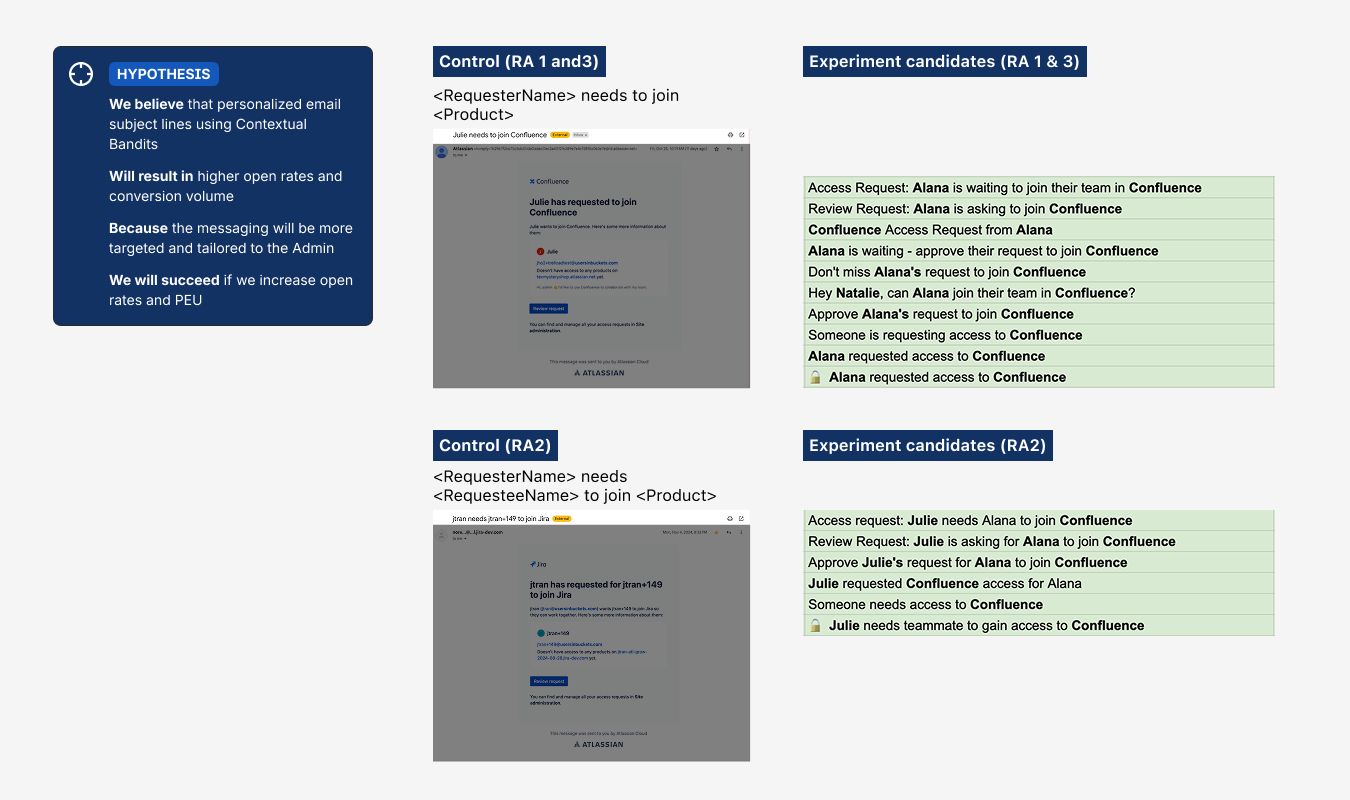
Hypothesis + experiment candidates for contextual bandit
Experiment 2
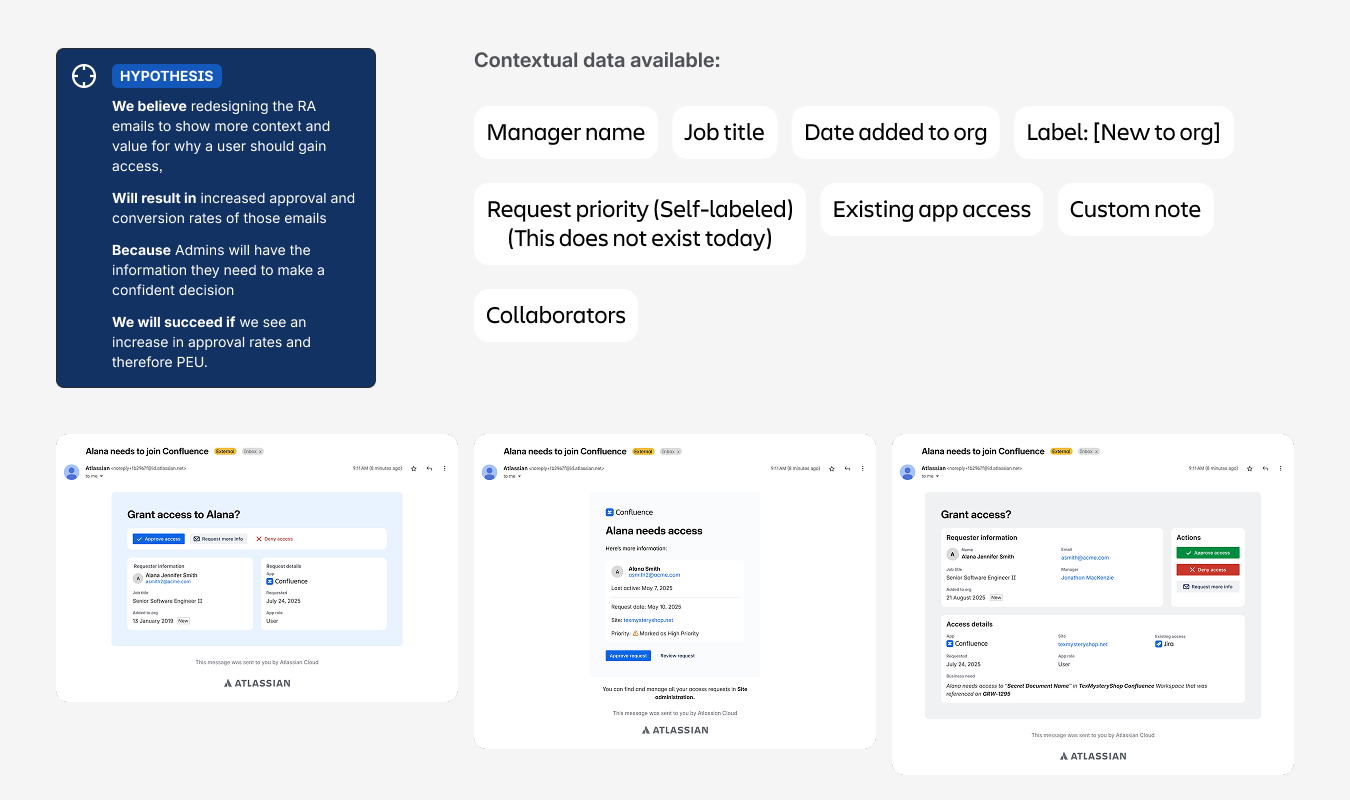
Hypothesis, tech discovery and concept exploration
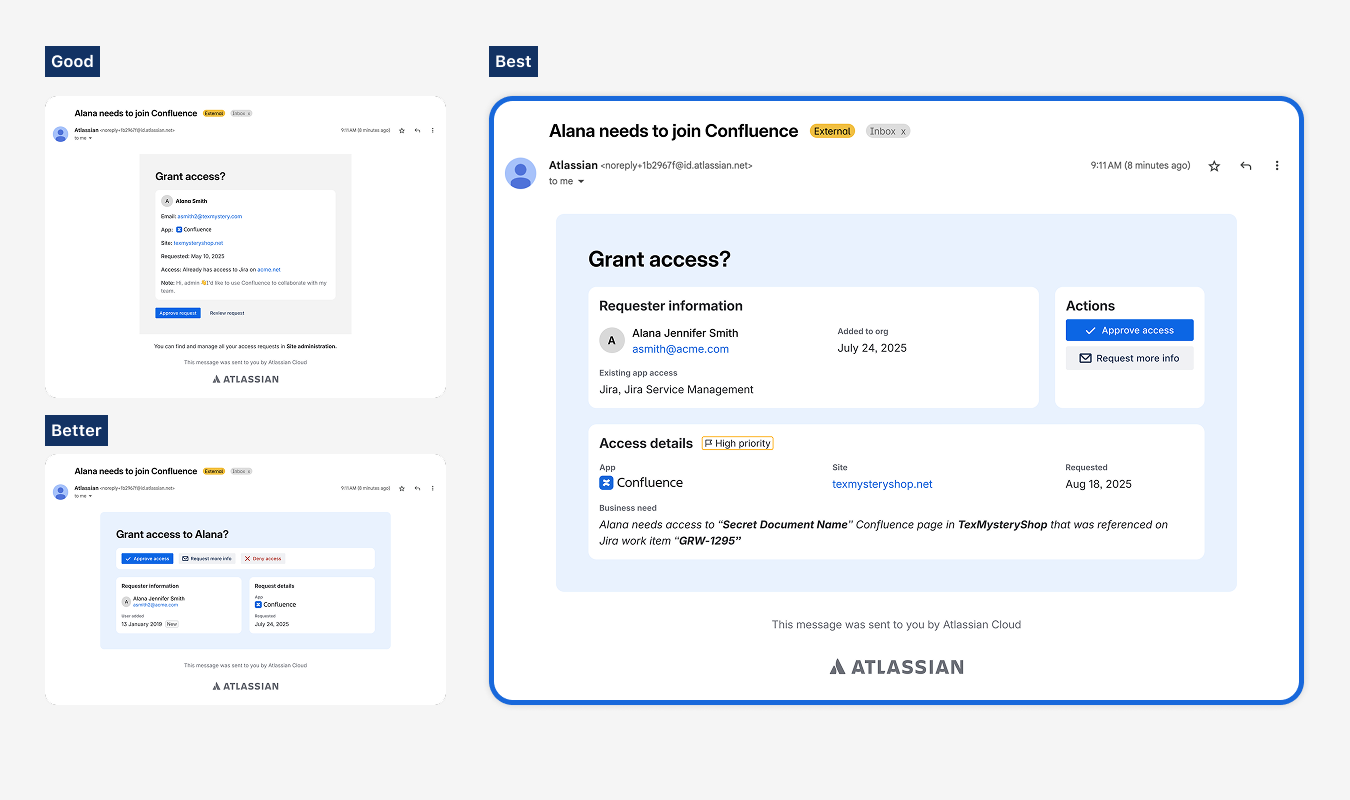
Good, better and Best options which balance desirability and feasibility
Experiment 3
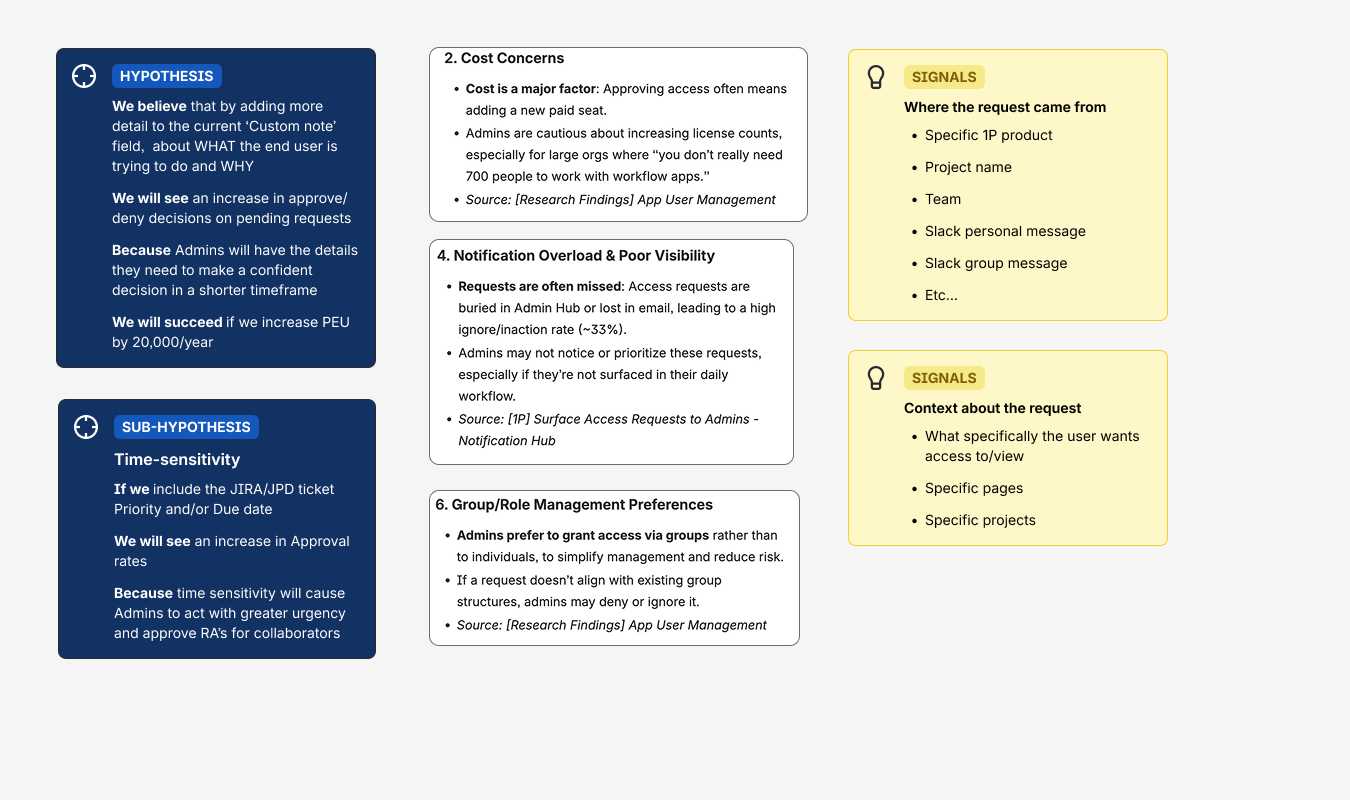
Hypothesis and sub-hypotheses, and some early qual insights surfaced by the Research Finder agent + tech discovery
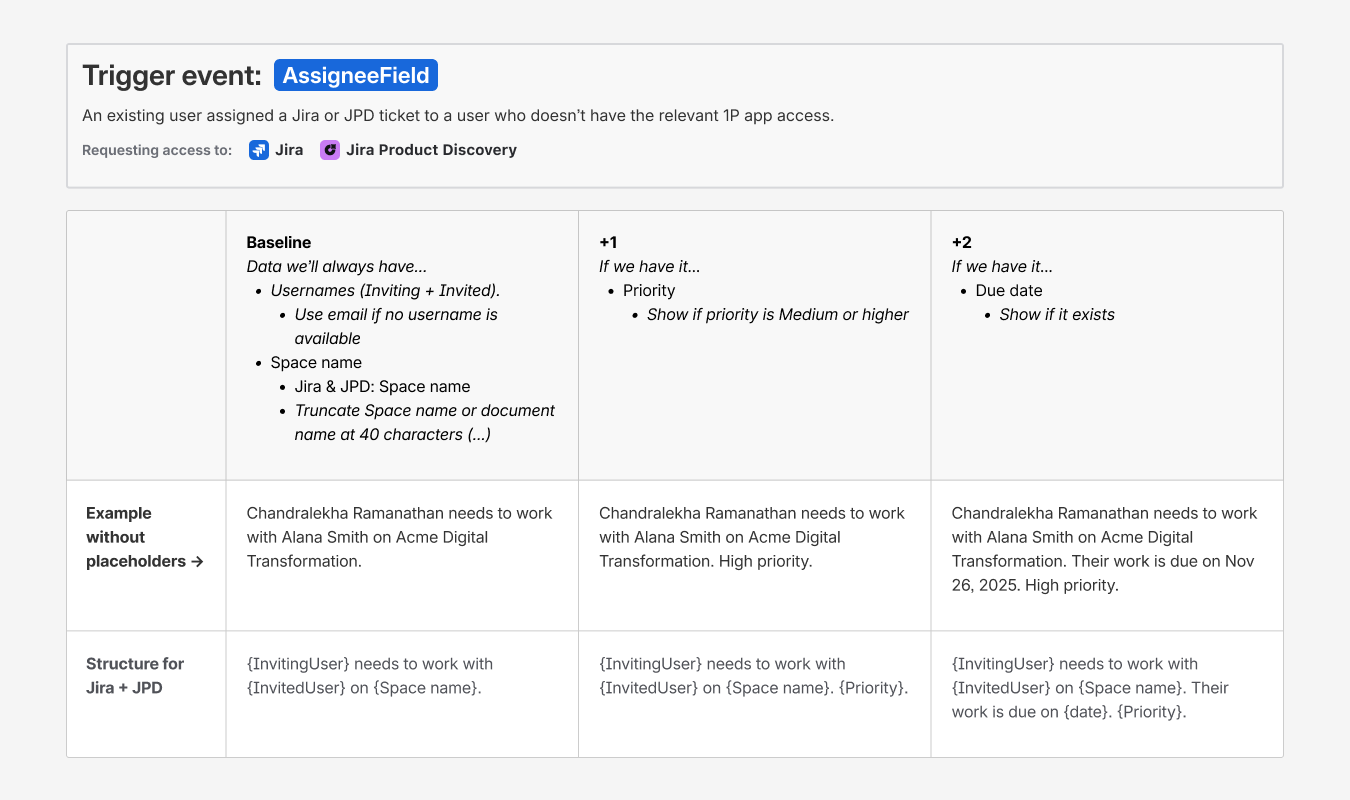
One example (out of 8) of how I documented the functionality of the contextual note which would build progressively based on available data
Experiment 4
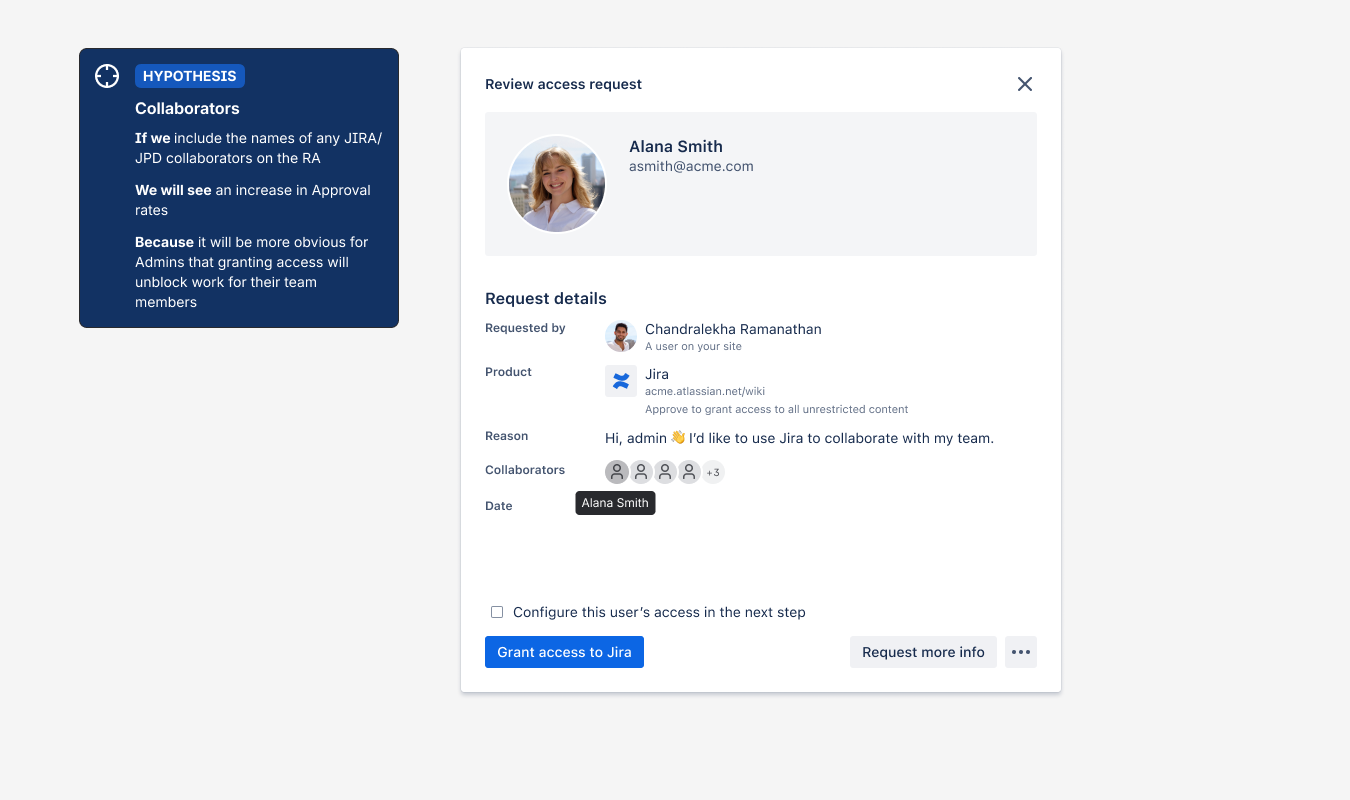
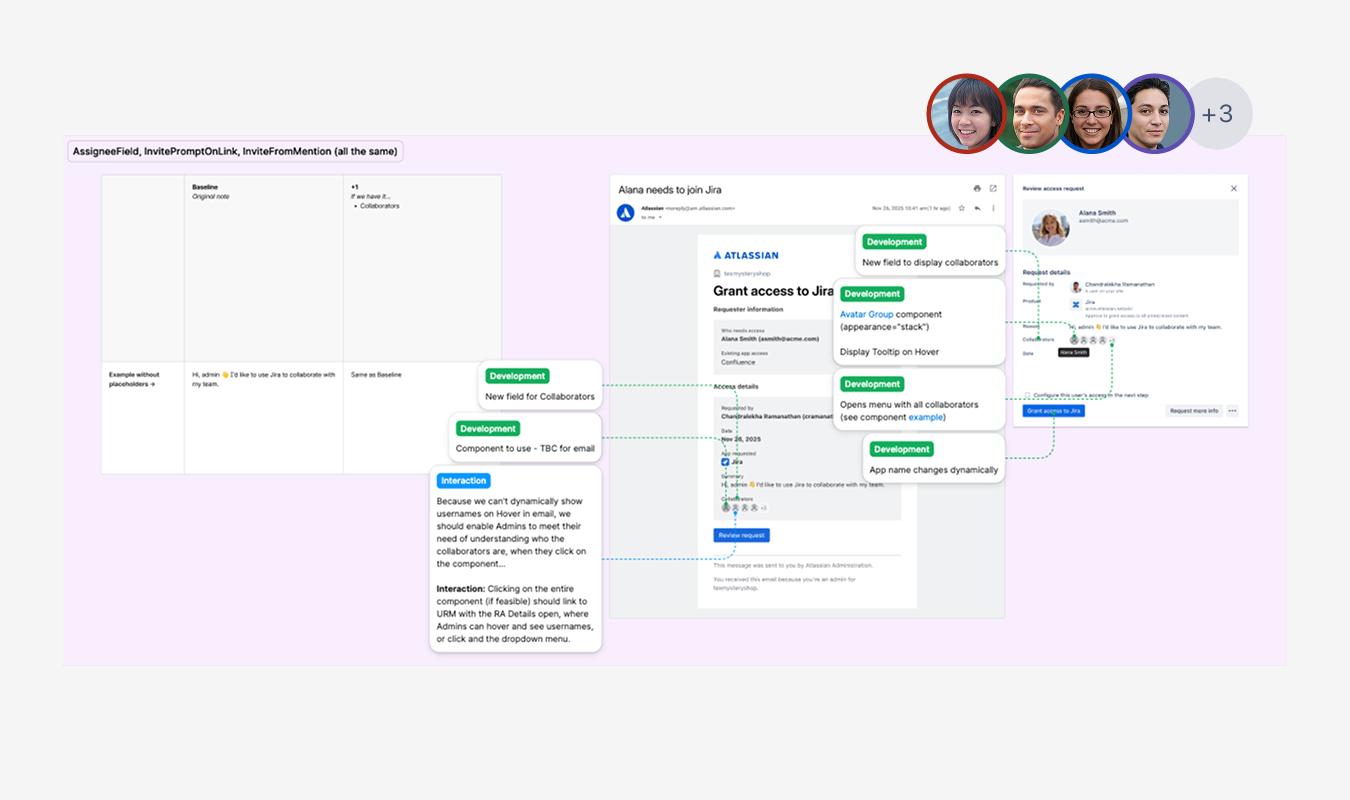
Example of documentation + mockups showing how the note appears in email and modal touchpoints